No Taxation Without Representation: Mosquito’s Fire Board at a Crossroads
- Jun 30
- 5 min read

For months, a shared services agreement has been pitched as the best path to stronger leadership, more reliable staffing, and better oversight for local fire protection. Yet as of now, the Mosquito Fire Protection District Board shows no sense of urgency in finalizing this critical path reorganization for the community, even after LAFCO’s January 2026 discussions underscored the need to formalize shared services between the Garden Valley and Mosquito Fire Districts.
The three videos below are from El Dorado LAFCO meetings—two from January and one from May—offering a county‑level view of this issue: clear urgency in January, followed by clear bewilderment at the slow progress in May.
Formal negotiations between the two districts have involved two board representatives from each side meeting to work through the details of a shared services agreement. In May 2026, MFPD Director Linnea Uggla was removed from her role representing the Mosquito community, leaving Director Bill Buhnerkempe—already skeptical of the agreement—to join MFPD Director Trent Williams at Garden Valley’s negotiating table. Director Williams has since taken Uggla’s seat and begun pushing for MFPD to pursue hiring its own Fire Chief, a move that would effectively stall any further discussion of shared services. In the video below, he suggests hiring a captain to serve as a chief, a proposal that appears to recreate the role of a fire chief, only with extra steps.
In the June 2026 monthly MFPD meeting, the idea of forming a fire chief hiring committee resurfaced—a practice previously used in the community. In 2020, a handful of select residents served on such a committee, and its involvement accelerated the decline of the department’s overall health. The cautionary lesson for Mosquito is clear: be wary of self‑proclaimed experts who point to their long tenure in the community as proof of authority, while failing to acknowledge how this influence has contributed to the district’s dilapidated and dysfunctional state. The record shows that a small but influential group has repeatedly steered the district toward damaging decisions, exposing the department to significant litigation, financial instability, and workplace hostility. The county’s own assessment reflects this history and helps explain why Mosquito Fire Protection District continues to struggle to attract qualified candidates and retain volunteers.
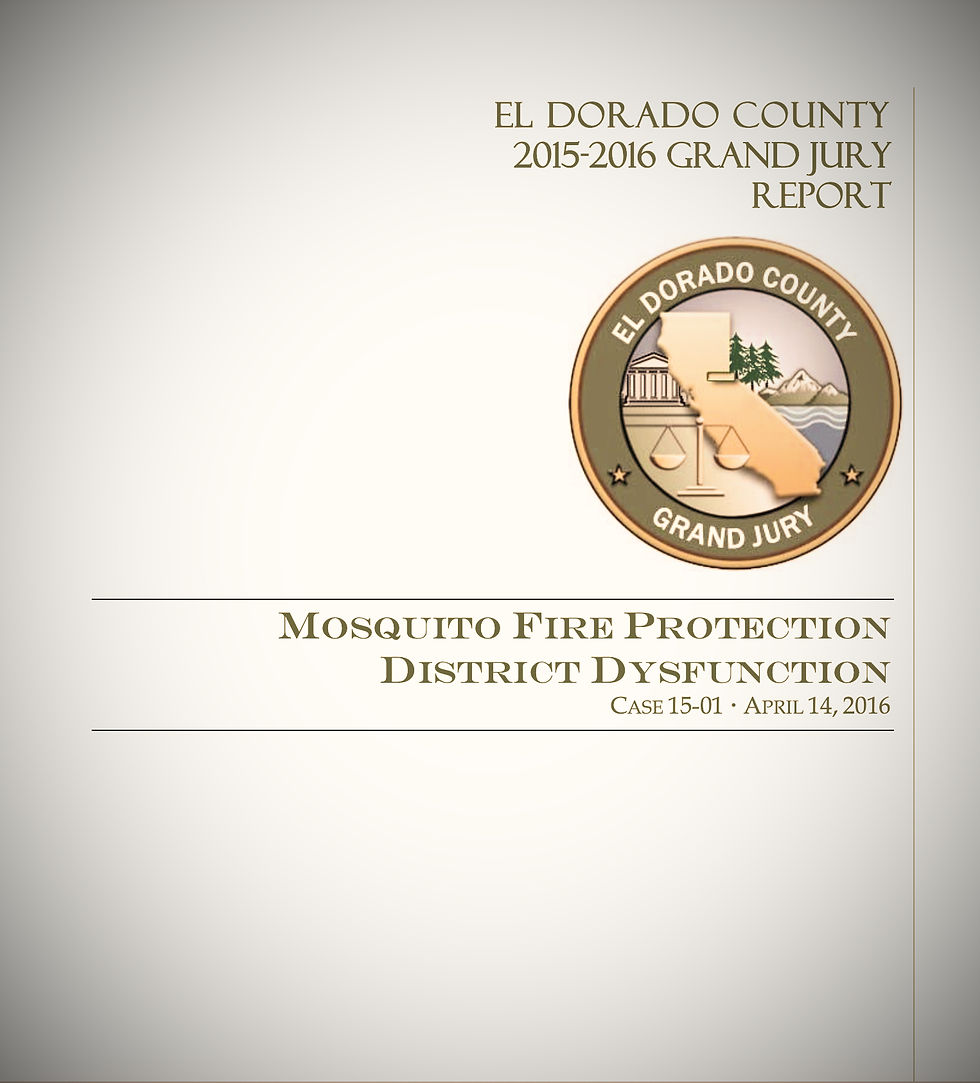

Representation, trust, and “no taxation without representation”
MFPD’s governance issues are not new, and many residents know this history firsthand. Director seats have frequently been filled by appointment rather than election, as previous board members left mid‑term and successors were selected to replace them. That pattern has left many community members feeling they have little meaningful influence over decisions, even as they are asked again and again to pay more for a system they don’t control.
The phrase “no taxation without representation” resonates in Mosquito today because it captures this frustration: residents are weary of appointed boards making high‑impact choices—staffing, budgets, and now shared services—without a clear, direct electoral mandate. As the nation marks its 250th birthday, our local fire governance is facing a very modern test of that founding principle: will our district’s leaders genuinely represent the will of the people when it comes to shared services?
A long record of asking for more money, yielding NO return on investment
Over the last decade, MFPD has repeatedly turned to the community for additional funding to support operations and station coverage. In 2019, the district proposed a ballot measure to increase the parcel assessment, arguing the revenue was needed to maintain and expand station coverage.

In 2021, Measure C proposed another funding increase and was rejected by voters, echoing a clear message from many residents: the district must learn to live within its means and address its internal governance issues before asking for more money. That “no” was not a rejection of fire protection—it was a rejection of the same governance model that has struggled to deliver consistent, transparent leadership.

The Mosquito Fire Protection District has received more than $2.45 million in FEMA SAFER grant funding over the past decade to bolster firefighter recruitment and retention. That history raises a pointed question: what happened to those funds, who oversaw their use, and why are the district’s roster, morale, and coverage now in worse shape than ever—despite this significant influx of support?
Given this record of mismanagement and missed opportunities, on what grounds does Mosquito Fire Protection District presume it is in any position to reject a proposal simply because county funding would be routed through Garden Valley, rather than through Mosquito itself?

The core concern: are negotiations in good faith?
The community’s biggest concern is not whether shared services are a good idea—the January LAFCO analysis and local fire experts have already made that case. The concern is whether Mosquito’s negotiating directors, who have openly questioned the value of shared services, are approaching talks with Garden Valley in good faith and with a genuine commitment to exploring benefits for residents.
Their reported comments in board meetings and agenda discussions suggest a narrow focus on maintaining the status quo, rather than weighing the long‑term safety and sustainability of the district. When the negotiators themselves are skeptical of the concept, the public is right to ask: are they slowing or steering the process away from an agreement that most residents clearly want to see?
What this means for Mosquito’s future
The slow progress on shared services is more than a procedural delay; it is a test of whether MFPD can evolve out of its pattern of managed decline. Residents have already stated they are unwilling to keep funding a system that struggles with turnover, fragmentation, and limited capacity, especially when viable regional solutions are on the table.
If the district continues on a solitary path, the likely outcome is more of the same: financial strain, governance churn, and growing community disengagement. If our leaders move decisively toward a shared services agreement, Mosquito could instead become part of a stronger, more integrated regional fire network—one that matches the community’s expectations for professionalism, transparency, and wildfire readiness.
For now, the question the community keeps asking is simple: what is the holdup, and whose interests are being served by continued delay?
Encourage the Mosquito Fire Protection District to Pursue The Shared Services Agreement In Good Faith
Tap below, “CLICK HERE TO VOICE UP” to auto-generate an email to the Mosquito Fire Protection District. On your mobile device, you may need to click and hold the link to select "Email" to open the draft, or email directly: pio.office@mfpd.us
Send any of the suggested items as written or tweak the message in your own words, but make sure your household’s expectations and concerns are heard before the July 1 meeting.
SUGGESTED ACTIONS FOR THE BOARD IN THE PRELOADED TEXT LINKED ABOVE:
1. I want the MFPD to host an informational Town Hall to answer my questions with featured speakers from the County, Mosquito Fire, and Garden Valley Fire.
2. I want the Board of Directors to be available to defend their positions at a more convenient time, such as an evening or weekend, during an in-person Town Hall.
3. I want the Shared Services Agreement signed without further delay.
4. I want the MFPD to provide more accessible information online to consider.
5. Insert your own option


Comments