Mosquito Packs Station 75 to Protect Their Future
The July 2026 Mosquito Fire Protection District Board of Directors meeting at Station 75 drew one of the largest turnouts of community members and fire personnel in recent years, both in person and online, and highlighted deep concern about the future of local fire and emergency services. It also exposed a long‑running tension over who the District is ultimately accountable to: the people who govern it, or the people who depend on it for their safety.

Meeting overview
As we wait for the official meeting recording to be posted, this recap offers a short description of what was experienced by those who attended. The regular board meeting began at 1:00 pm at Station 75 and ran well past 5:00 pm, with both in‑person and Zoom participation at levels far exceeding typical board sessions.
The in‑person meeting saw a significant increase in public attendance compared to previous months, with firefighters, volunteers, and other first responders joining residents in the room. Online, the Zoom session carried roughly five times the usual number of participants, showing that community members are closely following decisions that affect their fire protection and emergency response.
Community gathering and support
This meeting was the single largest gathering of Mosquito Fire past and present personnel in recent memory, and that presence shaped the tone of the day. Beyond agenda items, the biggest benefit was the connection among people—sharing stories, rebuilding relationships, and bonding over a common vision of what this community needs and what must be restored in its fire services.
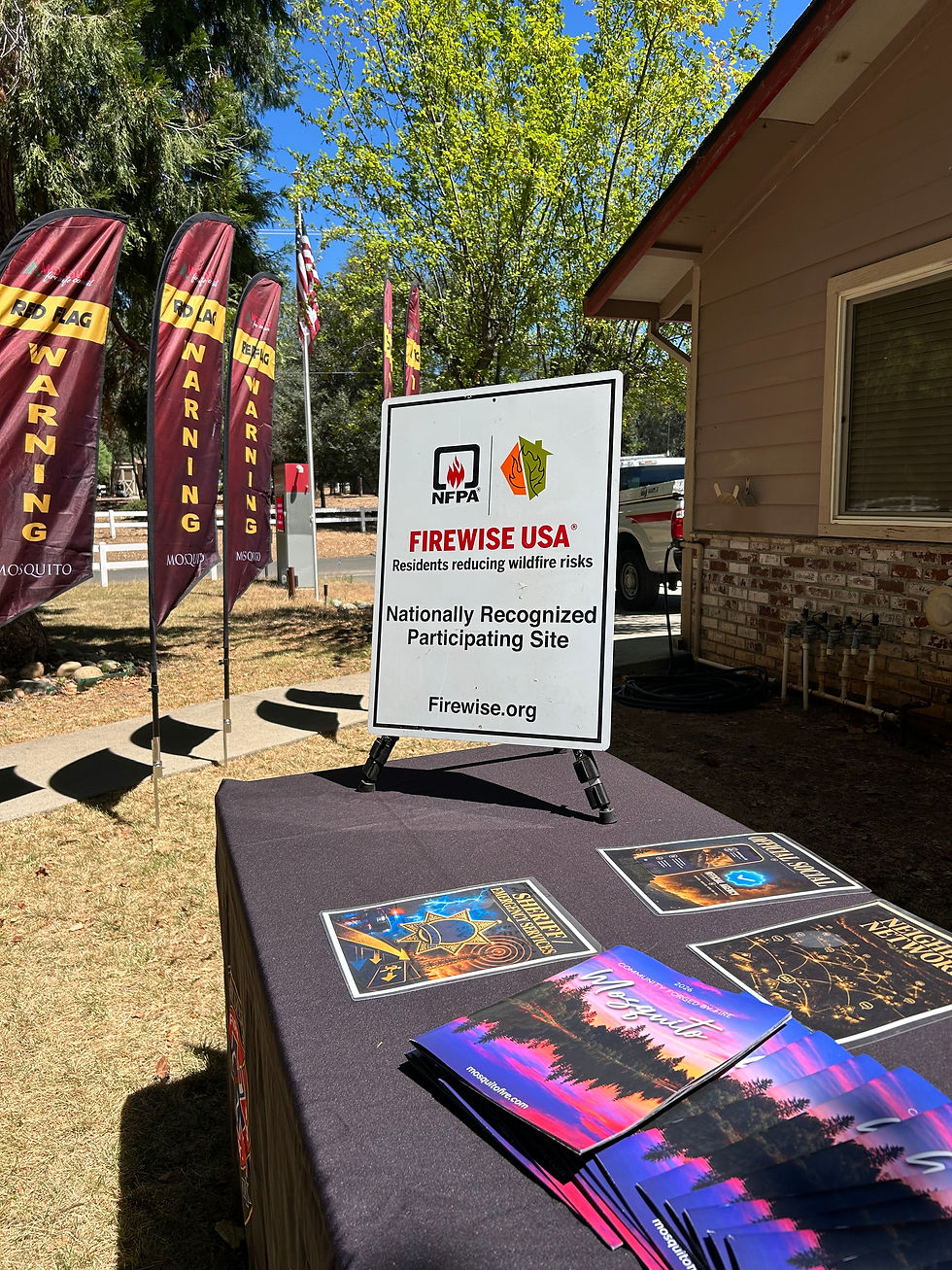
From 11:30 am through the end of the meeting, the Mosquito Fire Safe Council provided refreshments, educational materials, and kids’ activities, turning a long board session into a full‑day community event. This informal support helped families stay engaged and allowed more residents to attend and participate in the entire meeting rather than just a brief portion.
Thank you to the Mosquito Fire Safe Council for the time, care, and energy invested in this community and in our first responders. Your homemade refreshments, educational materials, and efforts to make these long meetings more welcoming do not go unnoticed; they have helped set a new standard for community outreach and engagement in Mosquito.

Key officials and fire discussion
El Dorado County’s Chief Administrative Officer, Sue Phillips, attended and offered comments several times, underscoring that county leadership is paying attention to the District and its current challenges. Chief Eddie Dwyer was present to provide operational insight, reporting, and explanations to both the board and the public.
One of the more focused moments came when a question was raised about the cause of the Stope Fire reported on July 14 in El Dorado County. Chief Dwyer recognized our Firefighters, Christian Johnson and Tyler Carte, for their effectiveness in extinguishing the fire and preventing a tragedy. Dwyer explained that CAL FIRE did not initiate a formal investigation into the incident, but during his own walkthrough he observed glass fragments at the site, which could have magnified sunlight in light, flashy fuels on a low‑humidity day—one possible ignition scenario that residents should be mindful of, even though it has not been formally confirmed. His comments reinforced the importance of everyday vigilance regarding fire hazards, including seemingly harmless debris that can contribute to wildfire starts.
Public questions and transparency concerns
Throughout both the official public comment period and informal conversations over the course of the day, several questions surfaced repeatedly:
Why is this meeting scheduled at 1:00 pm, when many residents are working or commuting?
Why is the negotiation process—both operational and financial—taking so long?
Why aren’t residents able to see what is actually being considered and discussed in detail?
Why is a potential tax increase on the table if current revenues and grant funds appear to be poorly used or squandered?
These questions all point to a central issue: transparency and trust. Residents are not simply asking for information; they are asking why they have had to fight so hard to get it, and why basic details about negotiations, finances, and operational priorities are not proactively shared.
Two competing ideologies
From the start of the meeting, it was clear that two long‑standing ideologies are colliding within the District. One ideology centers on tenure and institutional control: the belief that the most important people in the room are those who have served the longest, and that their history in the District inherently justifies current decisions. That perspective was evident in repeated self‑congratulation and public praise for board members, often without a clear explanation of what concrete accomplishments those accolades were meant to recognize.
The other ideology was embodied by professional first responders and both former and active Mosquito Fire volunteers who attended: the belief that the most important person in the room is the one who is in the most need—the community at large. For this group, board meetings are not ceremonies of self‑approval; they are working sessions where the community’s safety, station stability, and emergency readiness should be the first and only priority.
History of control and consequences
These competing ideologies have shaped Mosquito’s fire politics for years, and the July meeting made that struggle more visible than usual. At its core, the conflict is about control: who sets the agenda, who owns the narrative, and who feels entitled to define what “service” looks like.
You can see this thread running through Mosquito’s history: repeated turmoil driven by an unusually high turnover of fire chiefs, a revolving door of leadership that has turned the selection and retention of chiefs into a persistent source of instability for the District. That pattern extends to high turnover among staff and volunteers, and to a reliance on the Civil Grand Jury process as a tool for political leverage and extended oversight rather than as a neutral mechanism for improvement. Residents and firefighters alike describe a gradual erosion of station morale and operational effectiveness—a downturn many trace to the years following the retirement of longtime Chief Leo Chaloux, when repeated assurances that “everything is fine” often came from the same voices now praising those being praised for their longevity.
This raises a hard but necessary question for the community: did our problems really appear overnight, or have they been growing in the shadow of long‑term leadership that dismissed concerns, blamed professionals, and withheld information while using the District’s authority to bolster personal status? Long tenure can be a source of stability, but when it is used to avoid accountability, it becomes part of the risk—not part of the solution.
Accountability, resistance, and urgency
Residents came into this meeting expecting accountability and progress—clear plans, honest timelines, and a willingness to own mistakes. What many witnessed instead felt like resistance: pushback against criticism, excuses for delay, attempts to rewrite history, and dismissal or discrediting of information that had been shared with the public online.
The tone oscillated between intellectual inconsistency and simple refusal to engage with the severity of the District’s situation, including the fragility of its staffing and the consequences for emergency response. For community members, this wasn’t just frustrating—it was a reminder that ignoring risk is, in itself, a dangerous choice when you are responsible for life‑safety services.
Moving forward: community pressure and engagement
Despite the tension, this meeting also showed what is possible when the community shows up. The presence of so many firefighters, volunteers, and residents in one place—sharing stories, building relationships, and standing shoulder‑to‑shoulder—hinted at the kind of culture Mosquito can reclaim: one that centers the people most at risk and respects the professionals who respond when something goes wrong.
When the District’s recording is posted, it will be shared in full and broken into shorter segments so residents can easily review specific discussions and decisions. This is not just documentation; it is a tool for ongoing oversight, allowing the community to compare words to actions over time.
The call now is simple and urgent: keep showing up. Continue building connections with neighbors and first responders, support the board members who are actively working against divisive culture and for meaningful reform, and keep asking hard questions about how decisions are made and how funds are used. In doing so, Mosquito can move back toward the light—rebuilding trust, restoring a healthy station culture, and ensuring that our fire district once again reflects the core value that should guide every meeting and every decision: the safety of our families and our surrounding communities.
An opportunity for residents to “back the badge” and strengthen our sense of community is to join us at Mosquito Station 75’s National Night Out Open House on Tuesday, August 4. This event gives residents a chance to connect with one another, learn more about their fire station, envision what our future could look like, and experience the level of community our residents deserve.
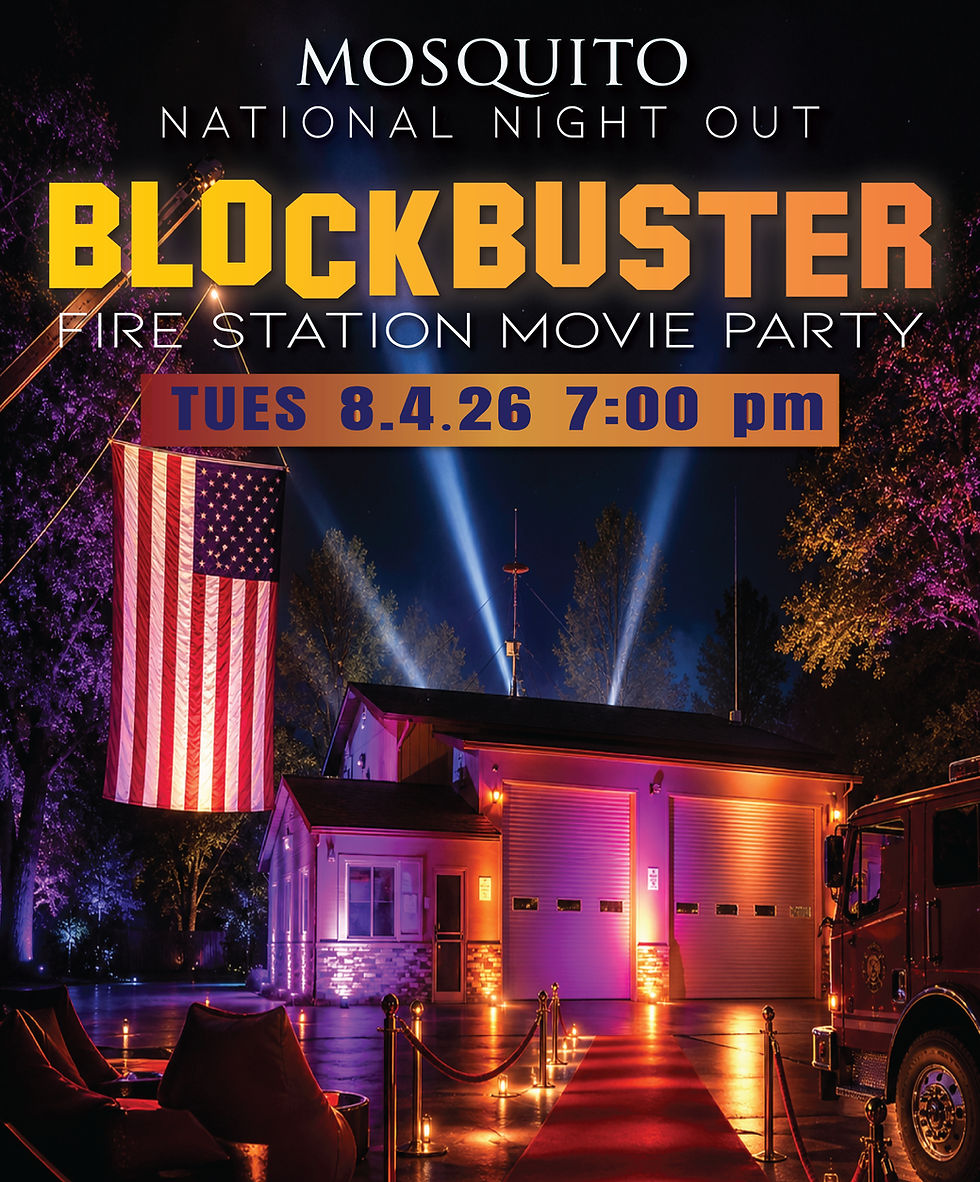
You’ll be able to see the station and engines up close and take a walk down memory lane in the Mosquito Firefighters Historical Museum—a growing collection of artifacts and photos celebrating our community and the first responders who serve and have served here. An outdoor movie theater will be set up for all ages, featuring a firefighter‑recommended favorite: “PLANES: Fire & Rescue.”
More information is coming soon, and we invite you to RSVP for updates at www.mosquitofire.com/nightout.


Comments